
Our Day Branch shapes how we behave in relationships. Ideally, it should contain a supportive…
About That Feminism – The Lena Dunham Case
 When we are dealing with sensitive topics, like feminism, perspective is everything. Some of you may know the tale about blind people describing the elephant by touching it, and each person ending up with a different description of the elephant’s body.
We all have different perspectives on the world around us, and there is probably no better way to analyze those perspectives than BaZi.
So, the question is, what makes a woman become a feminist?
Feminism, in its roots, is the idea that women are equal, or in some matters, better than men.
Fundamentally, we are equal, but our perspectives differ; therefore, we have different views on this issue.
The perspective variety comes mainly from our BaZi BaZi Chart. What we look for is the strength of Master Element and the Output Character Component (also known as CREATIVITY). If one or both of these are excessive, it’s most likely that the Power Character Component is weak.
For women, Power Component represents a husband, lover, male partner, and men in general. It also represents an authority figure, but that’s a different topic.
So if this Power Component is weak, it represents weak men, in general.
A woman with such a Chart will most likely attract weak men and will never be fully satisfied with them, unless the man is a surrendering type, which is rare. Because of their unique perspective, they will see men as generally weak. This perspective is emphasized by the fact that these women are strong and independent, a sensation coming from their strong Master Element or Output Component.
STRONG YIN FIRE MASTER ELEMENT
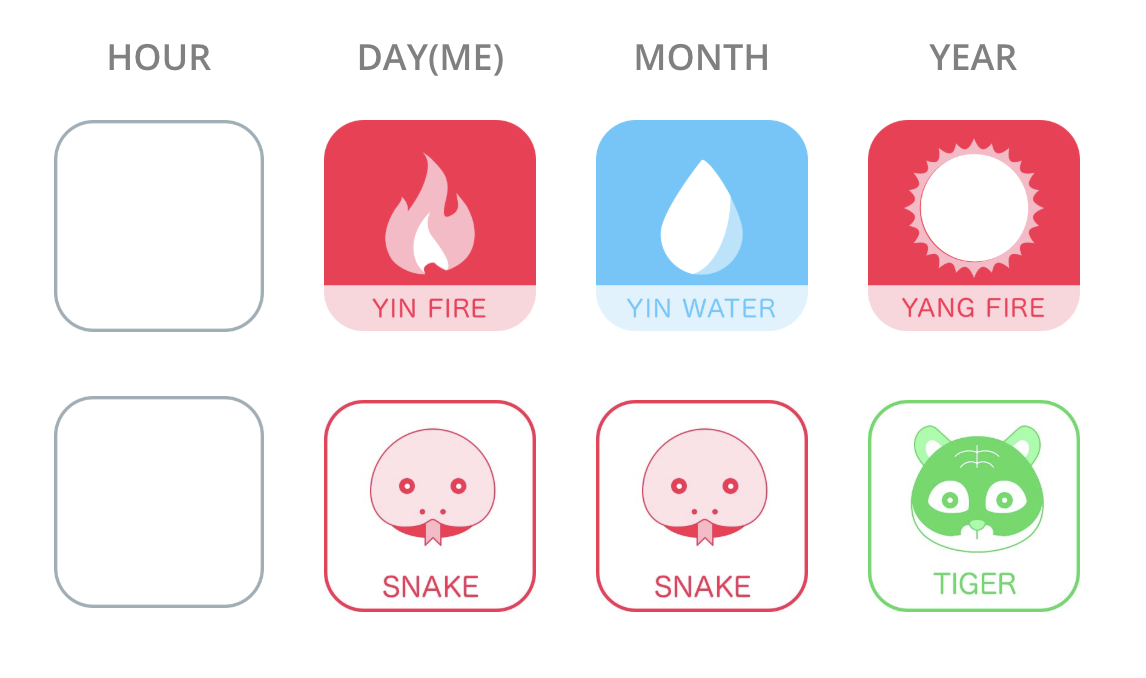
Lena Dunham is a good example of a strong Master Element that overly controls the Power component. She is one of the most well-known feminists.
In her Chart, we see that her ME, Yin Fire, is powerful, heavily supported by Fire and Wood branches. This Fire completely controls the Power Component, represented by the Water Element.
Relationships for her are complex because she has to find a man who can surrender to a woman, which is extremely hard. Most men want to be, well, men, and they want to be providers. If they submit themselves to a female partner, in our culture, that is seen as an embarrassment, so men suffer.
HIGHLY COMPETITIVE
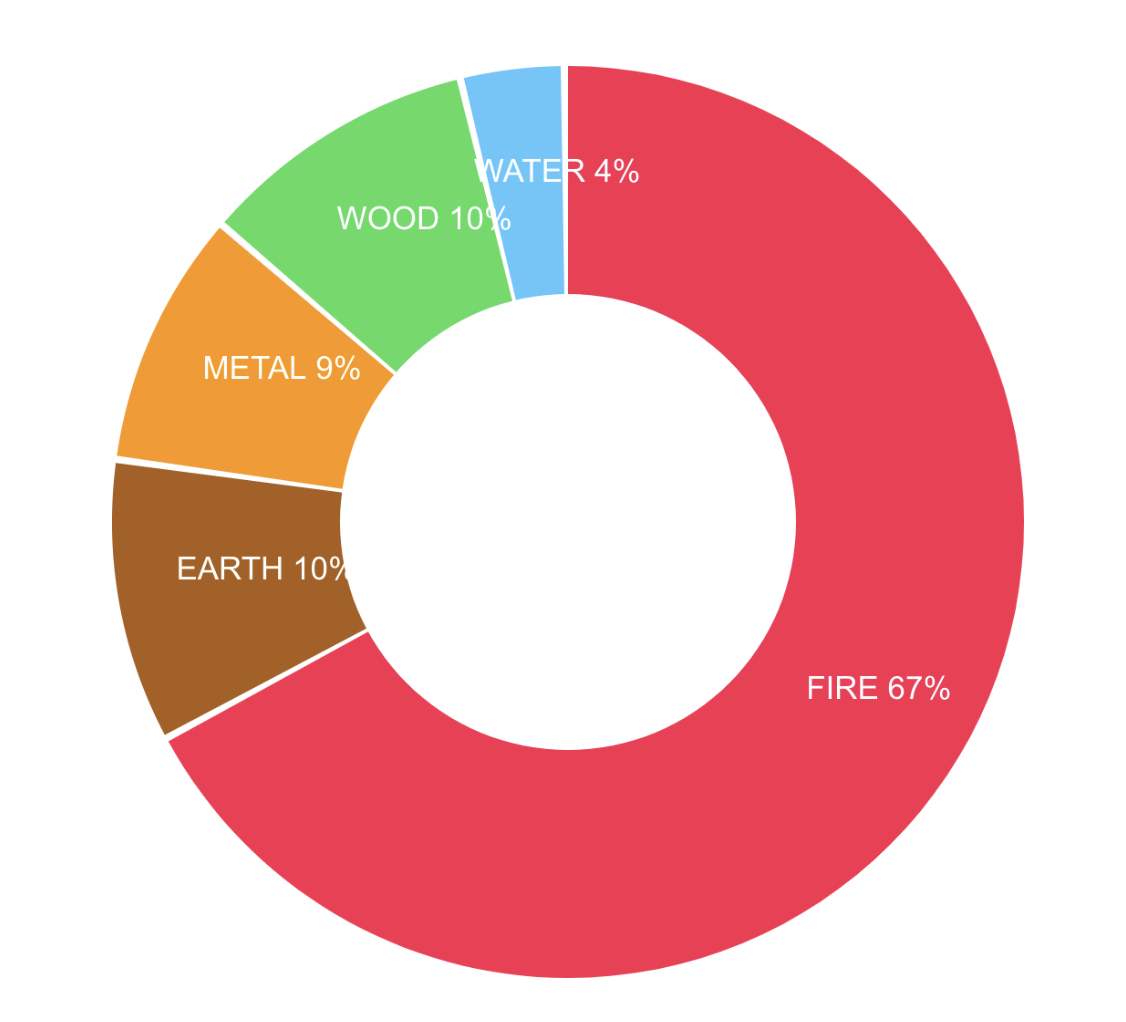
Another disadvantage in this Chart, when it comes to a relationship, is that her Competitor Talent is excessive as well (represented by Yang Fire). So, obviously, she is prone to conflict, which adds another layer of difficulty to her relationships. Her issues with people are pretty well known.
On the other extreme, if a woman has a weak Master Element and weak Output, and the Power Component is excessive, the dynamic is flipped. In this case, a woman might submit to the male power, and often it can be an emotionally painful experience.
If the balance is right between Master Element, Output, and Power Component, then it’s pretty likely that the person will have a healthier relationship with men in general.
It’s important to note that BaZi views the roles of women and men differently. In BaZi, men are supposed to control women; that is, it is some default position, but we have to understand that BaZi was developed thousands of years ago, where such a view in relationships was pretty much standard. These days, we seek balance, so the BaZi Chart doesn’t need to show a man controlling a woman, and most experts do not look for such a dynamic.
As we can see, things are not that simple when it comes to equality between men and women. We seek balance, but each individual is different, and for some women, achieving it might be pretty tricky. However, if you understand the root of the problem and the overall dynamic, it becomes easier to find solutions, and we spend less time and energy blaming others.

Related Posts