Locating the Birth Chart Within the Architecture of the Human Being Most people come to…
Branches interaction cheatsheet
Those familiar with the BaZi method know how difficult it is to remember all interactions between branches (also known as Chinese zodiac animals).
There are dozens of possible interactions, so we decided to provide a visual cheat sheet to help you find and memorize those key points quickly.
For simplicity, we focused here on four main interactions: Harmony, Six Combinations, Clashes, and Harms.
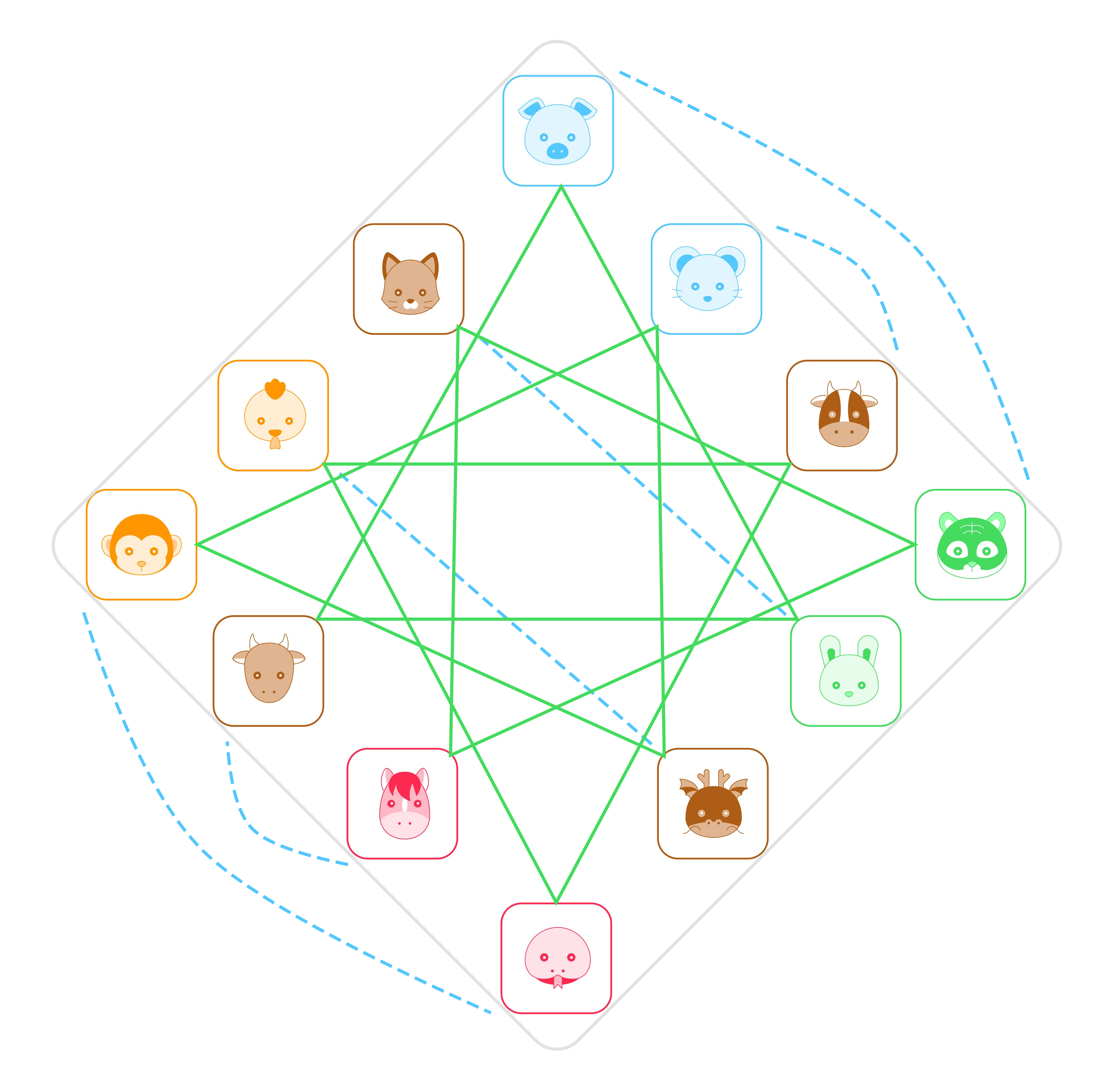
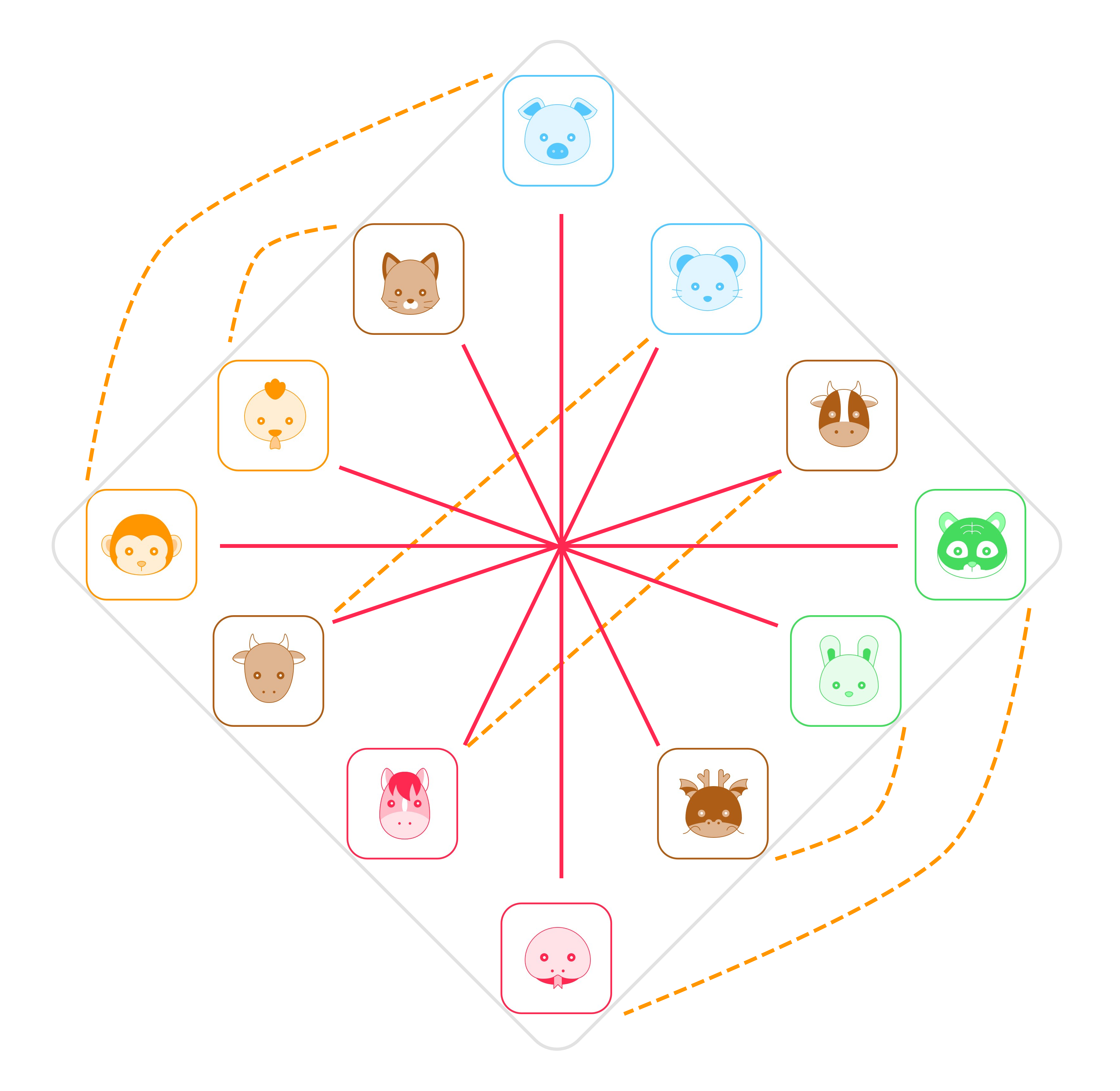
We divided the cheatsheet into two maps, one for positive interactions (Harmony and Six Combinations) and one for negative interactions (Clashes and Harms).
HARMONY & SIX COMBINATIONS
On the map below, the green line shows us the Harmony combination, which involves three branches; together, they make one particular Element stronger. For example, Harmony among the Dragon, Rat, and Monkey creates a strong Water structure. Two branches can also create Harmony, let’s say between Dragon and Monkey, while Rat is missing, but is generally considered to be a weaker type of combination.
The Six Combinations, connected with a blue line, involve only two branches, and often they produce an additional Element if certain conditions are met. For example, Pig and Tiger form a combination that supports the Wood Element.
CLASH & HARM
Regarding negative interactions, the Clash is most relevant (as indicated by red lines), as it represents the exact opposite. So, for example, Rat is clashing with Horse because Rat is mainly Yin Water while Horse is mainly Yin Fire, therefore Rat has a tendency to hurt Horse. It also goes the other way around; if Rat is in a weak position, then Horse will dominate.
Harm interactions are marked with orange lines and represent one type of disturbance. For example, Horse’s Yin Fire will harm Ox’s Yin Metal and Yin Water.
While clashes are more visible disturbances, Harms can often be emotional in nature, not visible from outside, yet equally harmful and disruptive.

Related Posts