I usually don't like analyzing horrible tragedies, but the Lindsay Clancy case has been dominating…
Unabomber: Need For Expression Going Terribly Wrong
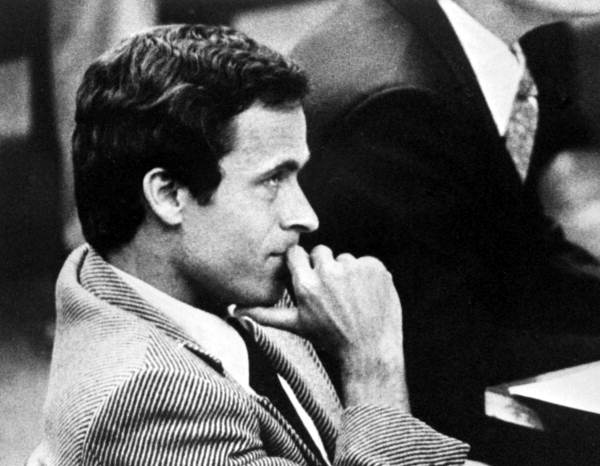
 I heard about the Unabomber a long time ago, but I didn’t know much about his background or childhood. There is a new movie with Russel Crowe that covers these rather interesting details and how he got radicalized in the end through experiments at a university.
Ted Kaczynski’s Chart: Expression Without Enough Brakes
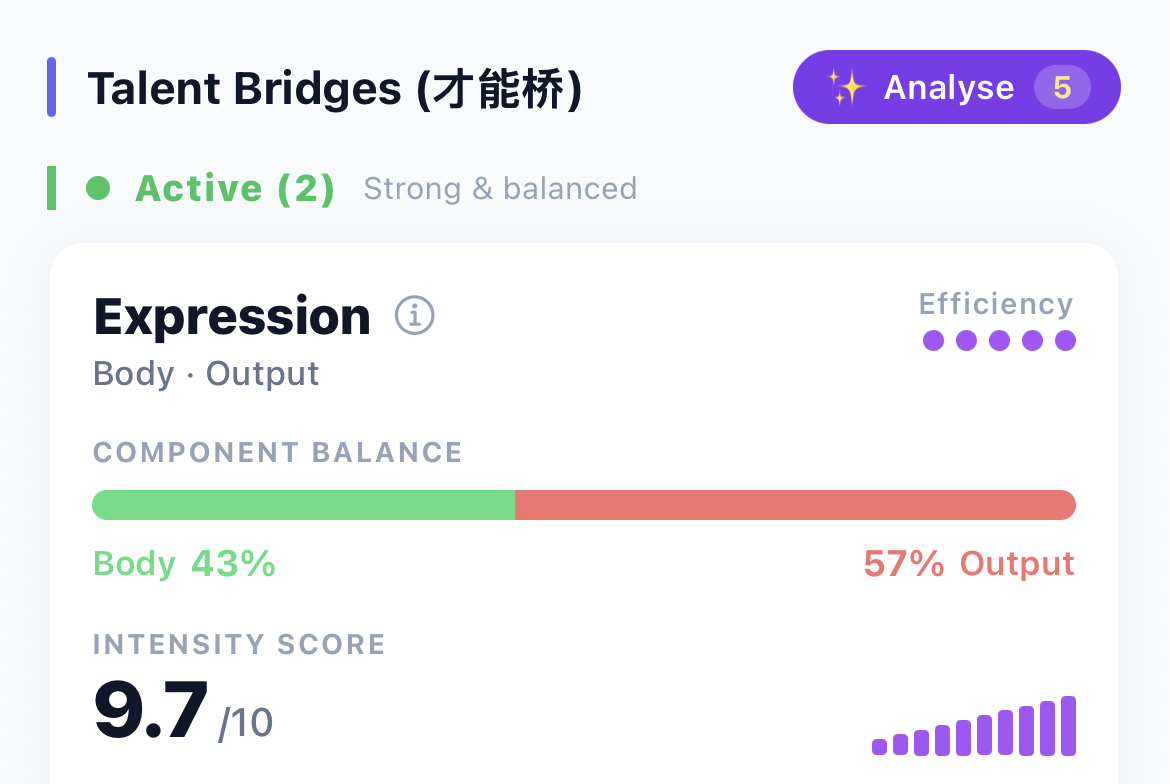
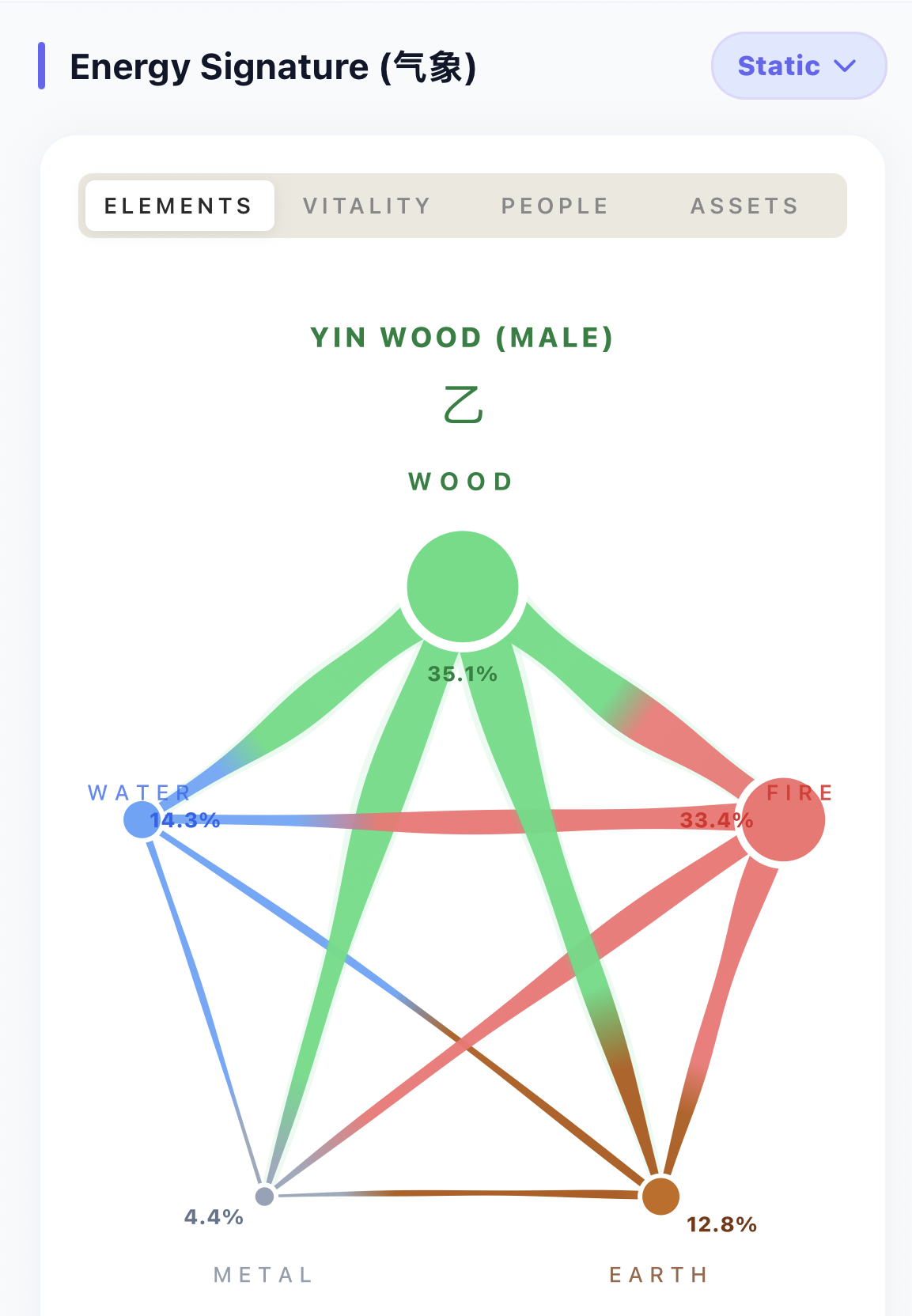
Ted Kaczynski’s chart is a clear example of what happens when Expression is strong, but containment is weak. The chart gives him a real capacity to externalize ideas, push a personal line, and act from internal conviction. This was not a passive or deferential structure. It had momentum that desperately needed a resolution, which never arrived.
Strong Output, Weak Regulation
The clearest mechanic is the imbalance between Output and Power. Output (Fire) is active and usable; Power (Metal) is much thinner. That matters because Power is the part of the system that helps a person tolerate structure, hierarchy, correction, and limits.
When Power is weak, outside control does not land as guidance. It lands more like interference. So the chart naturally favors self-direction over cooperation with authority. That does not automatically produce rebellion, but it does create a deep resistance to being managed.
The Expression Bridge Is Real
This is where the Expression Talent Bridge becomes important. Ted Kaczynski had enough internal fuel to think, formulate, and express with force. The chart does not describe a silent person. It describes someone with a strong need to articulate an internal logic and act from it.
Translation: the voice is not decorative here. It is part of the operating system.
That kind of structure can be productive when it is channeled into scholarship, invention, or disciplined work. It can also become dangerous when the person starts treating their own reasoning as self-evidently superior to everyone else’s.

When Conviction Replaces Flexibility
The chart suggests a mind that can become self-sealing under pressure. Once the inner framework hardens, external contradiction does not easily soften it. That is the risk of strong Output without enough Power: expression becomes more convincing than restraint.
In a healthier version of the same wiring, this can look like originality, independence, and the courage to stand apart. In a less healthy version, it can become isolation, ideological rigidity, and the refusal to negotiate with reality.
What the Chart Explains About His Actions
The chart does not prove motive in a moral sense. It does not explain every choice he made. But it does explain the structure that made certain choices easier than others.
Ted Kaczynski’s chart supports:
- strong internal drive
- a real need to express an inner code
- low tolerance for external control
- difficulty letting authority shape behavior
That combination helps explain why his life moved toward hard separation from society and why his thinking could become so absolute. Once the expression system outruns the braking system, the result is rarely balanced.
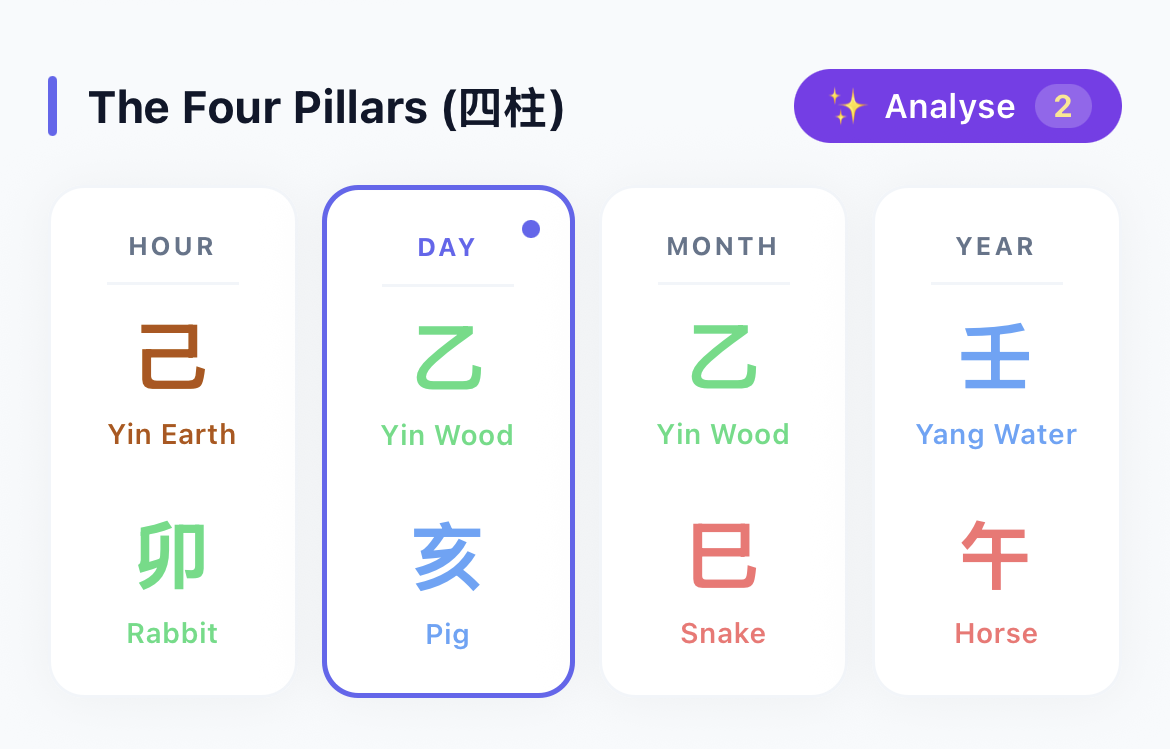
Snake-Pig Clash
The clash between his day and month branches indicates significant instability. He desperately wante to have a career in philosohpy and public recognition, but because his career pillar was clashed (Snake) that become incresingly more difficult, which made him even more frustrated. That also affected his relationship with his parents, which was pretty bad.
The Bottom Line
Ted Kaczynski’s chart is not a chart of quiet compromise. It is a chart of forceful inner expression with limited regulatory counterweight. That can produce originality. It can also produce isolation. In his case, it clearly did both — and in the worst possible way.
PS: To create this case study, we used Meta BaZi AI research capabilities. To try for yourself, go to www.metabazi.com
Related Posts